Your attachment style is shaped early in life through your relationship with parents or other primary caregivers. These first bonds create a blueprint for how you connect with others—whether in romantic partnerships, friendships, or even at work.
Gaining insight into your attachment style can deepen your understanding of yourself and your patterns in relationships. Attachment styles generally fall into two categories: secure and insecure. A secure attachment style supports trust and healthy connection, while insecure styles can make it more difficult to navigate trust, vulnerability, and communication—but with the help of therapy, you can develop greater awareness and build healthier, more secure relationships.
Quick navigation
What does the phrase “attachment style” mean?
Attachment styles are patterns of relating to others that begin in early childhood and continue to influence how we build and maintain relationships throughout life.
Secure and insecure attachment styles
Infants are dependent on caregivers for physical needs (such as food, shelter, and clothing) and emotional needs (affection, stimulation, and comfort). When the parent or other primary caregiver meets these needs consistently, the infant usually develops a secure attachment style that supports healthy adult bonds. When the needs are not met, however, the child may develop an insecure attachment style.
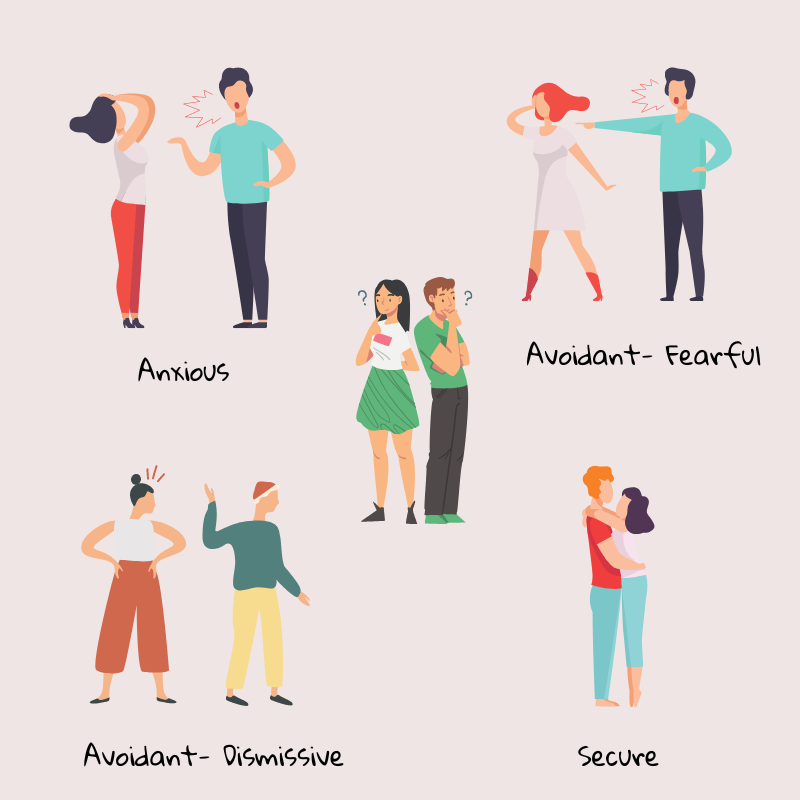
Anxious attachment style
People with an anxious-preoccupied attachment style often rely heavily on their partner for reassurance and may feel insecure or anxious when their partner seems distant or unavailable. They often seek constant reassurance and may become clingy or jealous in their relationships.
Avoidant-fearful attachment style
People with a fearful-avoidant attachment style often long for closeness and connection, yet at the same time feel fearful of vulnerability or becoming too close. This inner conflict can make it difficult to trust others and can create challenges in their relationships.
Avoidant-dismissive attachment style
People with an avoidant-dismissive attachment style often place a high value on independence and self-sufficiency, sometimes prioritizing these over emotional closeness. In relationships, they may appear distant or detached and may find it challenging to share their feelings or needs with their partner.
Secure attachment style
People with a secure attachment style typically feel at ease with closeness and can balance their need for independence with their desire for connection. They communicate openly and honestly, and they tend to be trusting, supportive, and reliable partners.
How attachment styles affect mental health
Attachment styles can have a significant impact on mental and emotional well-being. Insecure attachment patterns—such as anxious, avoidant, or fearful-avoidant styles—can contribute to heightened stress, anxiety, depression, and difficulties in managing emotions. They may also influence self-esteem and the ability to form supportive, trusting relationships. Understanding your attachment style can provide valuable insight into these patterns and offer a path toward healthier coping strategies and stronger emotional resilience.
Can attachment styles change?
While attachment styles are shaped in early childhood, they are not fixed for life. With self-awareness, healthy relationships, and intentional effort—often supported by therapy—people can develop more secure ways of relating to others. Experiences that build trust, improve communication, and encourage emotional vulnerability can help shift patterns of insecurity, allowing for stronger, more fulfilling connections over time.
Looking for help?
If you think that your relationship difficulties can be traced back to your attachment style, Kate Smiley, LCSW, can help you understand these patterns and explore treatment strategies tailored to your needs. She is dedicated to supporting you in building healthier relationships and greater emotional balance. Contact her today to take the first step toward more secure, fulfilling connections.
Suggested reading for you

Self-compassion – it can change your life
Do you feel trapped in your current situation or dissatisfied with your life? Do you often catch yourself being overly self-critical? You might be surprised

Silent Inheritances: The Impact of Intergenerational Trauma
By Kate Smiley, LCSW — Licensed clinical social worker specializing in anxiety, depression, trauma, eating disorders, and EMDR therapy As a woman in her 70s

Anxiety
Do you often find yourself feeling restless, on edge, or consumed by worries about what could go wrong? Anxiety can disrupt your performance at work